Parent Tips
News
5 Life Skills Kids Only Learn at Preschool

The Classroom Is a Tiny Society
Home is where children feel most loved. But preschool is where they learn to be part of a world beyond home.
The unique dynamic of a classroom — 8 children, one table, one set of paintbrushes — creates learning opportunities that no one-on-one environment can replicate. Here are five skills your child will build in ways that simply aren't possible at home.
1. Navigating Conflict Without an Adult Stepping In
At home, when two siblings fight over a toy, a parent usually intervenes quickly. At preschool, with a low but intentional teacher ratio, children are gently guided to work through small conflicts themselves.
"She has the red crayon and I want it." Learning to wait, to ask, to accept "not yet" — these micro-negotiations are the foundation of emotional intelligence.
2. Being Part of a Group
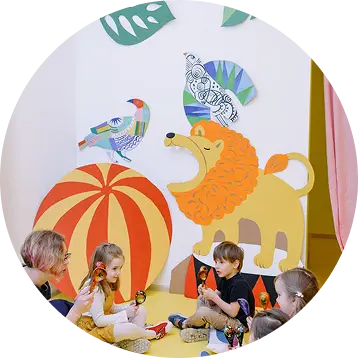
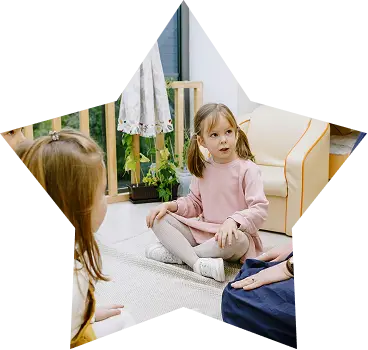
Taking turns during circle time. Waiting in line. Listening when it's not your turn to speak. These feel like small things, but they require a level of self-regulation that is genuinely hard for young children — and essential for every stage of life that follows.
Group membership is a skill. Preschool is where it's learned.
3. Making Friends From Scratch
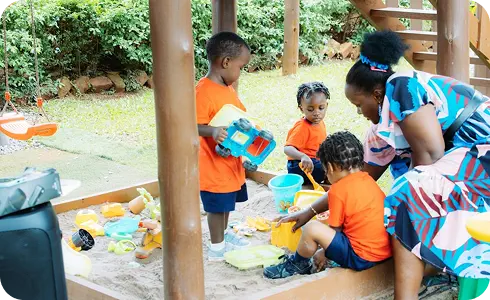
At home, friendships are facilitated by adults — playdates arranged by parents, cousins at family gatherings. At preschool, your child learns to walk up to another child and say "Can I play?" and to handle both yes and no.
This is one of the most important social skills a human being ever develops — and preschool is often where it happens for the first time.
4. Independence in Daily Tasks
Self-feeding. Putting on and taking off shoes. Washing hands without being reminded. Tidying up after an activity.
When these tasks are practiced in a peer environment — where everyone around you is doing the same thing — children are far more motivated to try than when a parent is watching. Peer modeling is a powerful learning tool.
5. Managing Big Emotions in a Safe Environment
At home, a meltdown is managed by the people who love your child most. At preschool, children learn to regulate emotions with the support of a caring teacher — but without the parental rescue reflex.
This is not a harsh environment. It is a safe, supported one. The difference is that children build genuine coping skills rather than relying entirely on parental co-regulation.